Preserving traditional stilt houses in Nghia Do
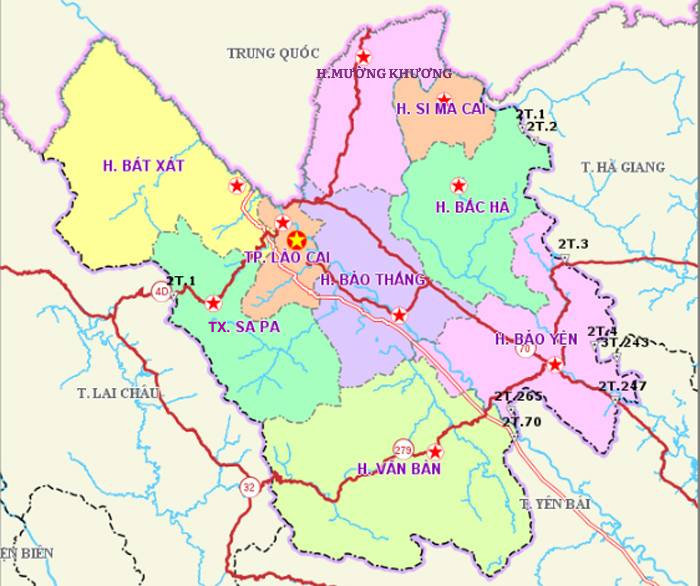
When mentioning Nghia Do commune (Bao Yen), not only local people but also many domestic and foreign tourists remember the image of traditional stilt houses of the Tay ethnic group in peaceful, green villages. Stilt houses and stilt house culture have become a characteristic of this land.In early May, we arrived at Nam Cam village, Nghia Do commune. At this point, after 2 months of construction, Mr. Luong Thanh Uyen's house has entered the completion stage. From afar, everyone could recognize that the new house has the traditional stilt house architecture of the Tay ethnic group here. The basic difference was that the entire system of columns, beams, house frames and kitchens were all cast from reinforced concrete instead of wood like traditional houses.
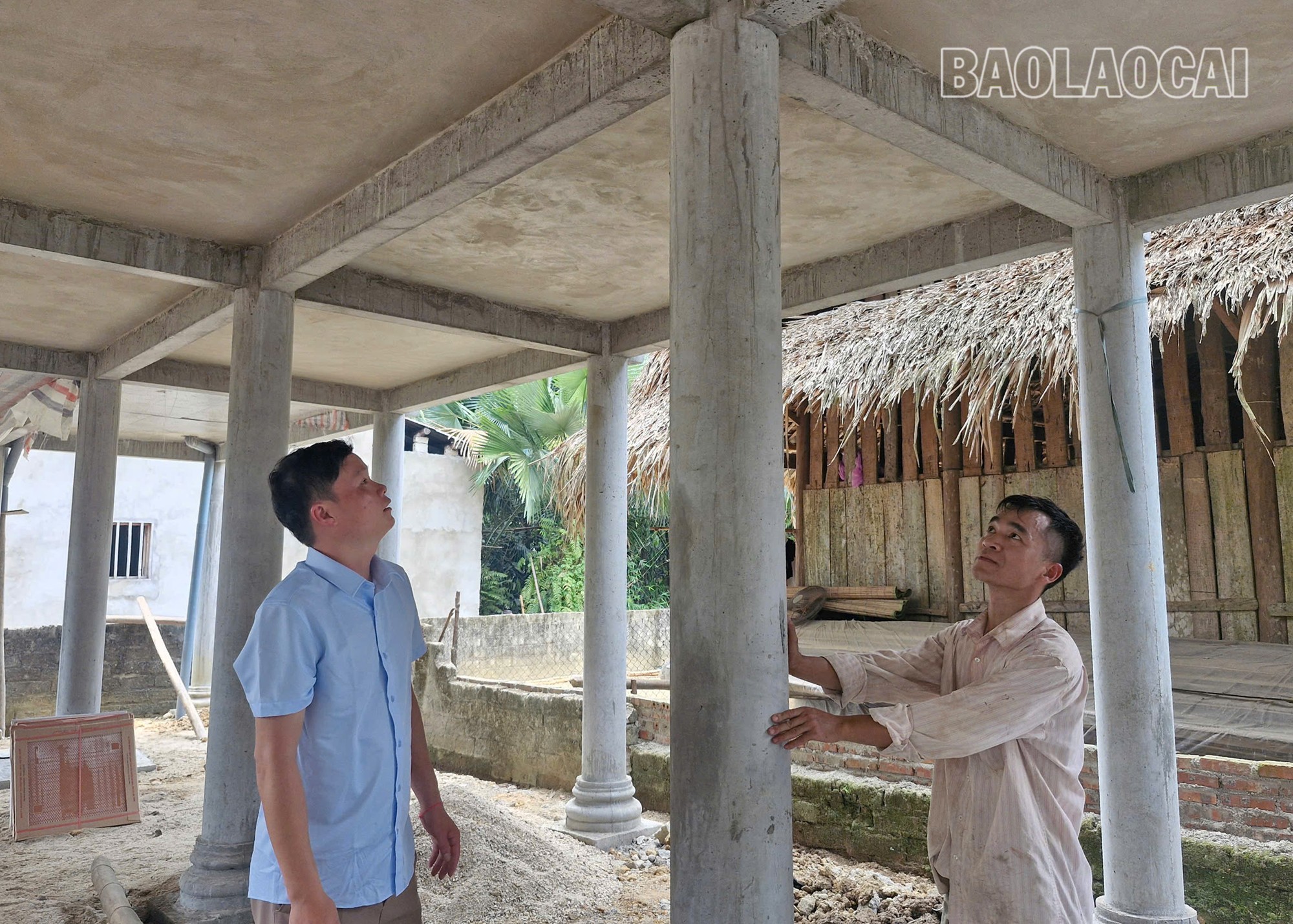
Mr. Uyen built a reinforced concrete stilt house with columns nearly 30 cm in diameter.
Mr. Uyen said that in 2008, when he first moved out, due to difficult family circumstances, he did not have enough money to buy a lot of good wood to build a traditional stilt house, so he only built a wooden house with a regular attic. Over time, the house has deteriorated and was unsafe.
For many years, Mr. Uyen had dreamed of building a stilt house in the traditional architecture of the Tay people in his hometown, but he did not have good wood to do it. Thanks to the introduction of the locals, Mr. Uyen hired workers to build a concrete frame for the stilt house and built the house as he wished.
Not far from Mr. Uyen's house, Ms. Hoang Thi Thanh Thuy's house stands out with its yellow painted frame and palm leaf roof following the traditional architecture of stilt houses in Nghia Do.
Coming closer, looking at the rows of columns, beams, and walls, many people still mistake this for a wooden house because of the beautiful wood grain. In fact, this is a stilt house with a frame entirely made of reinforced concrete, painted with a very delicate imitation wood look, so it is both beautiful, sturdy, and in harmony with the surrounding environment.
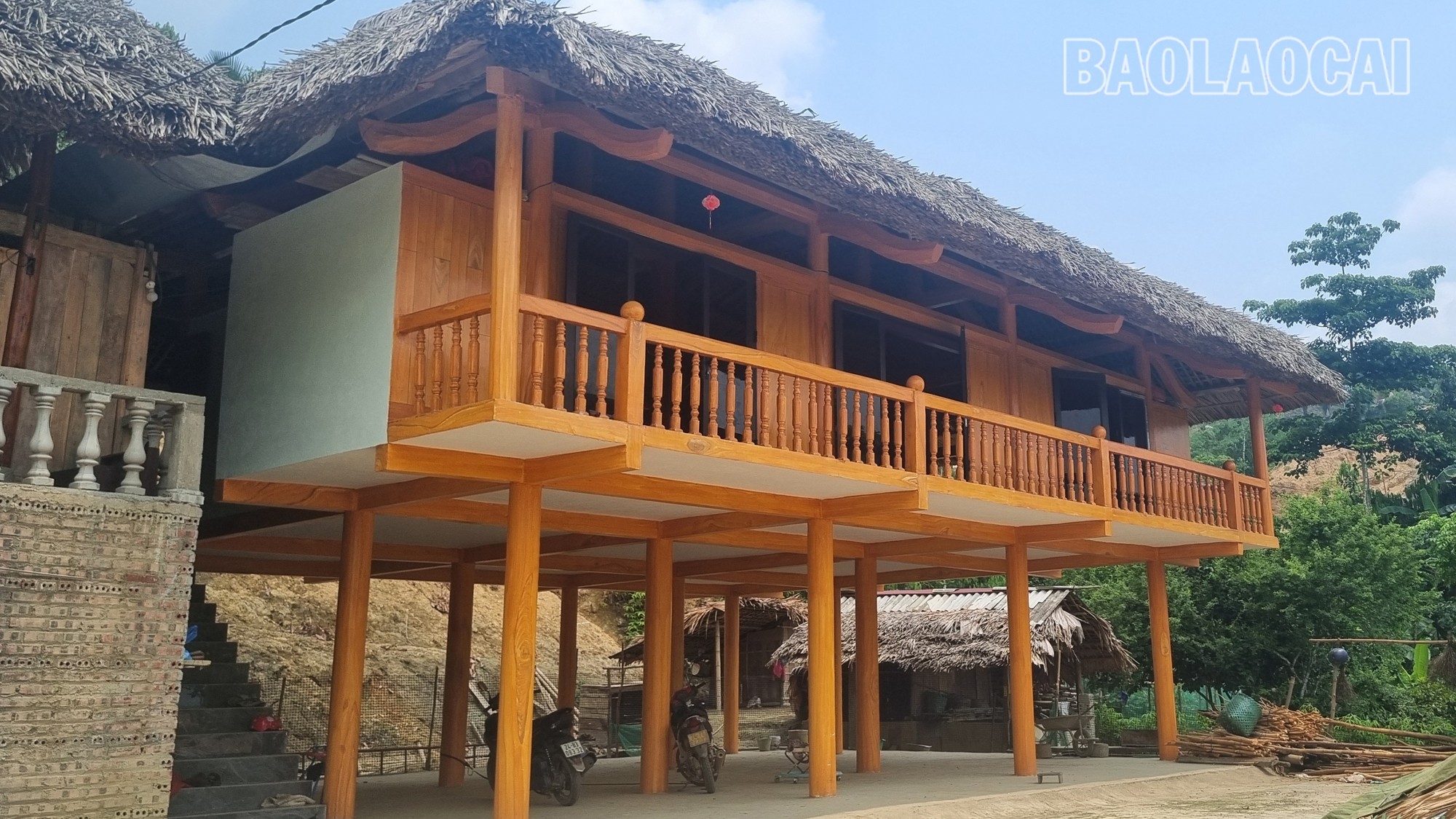
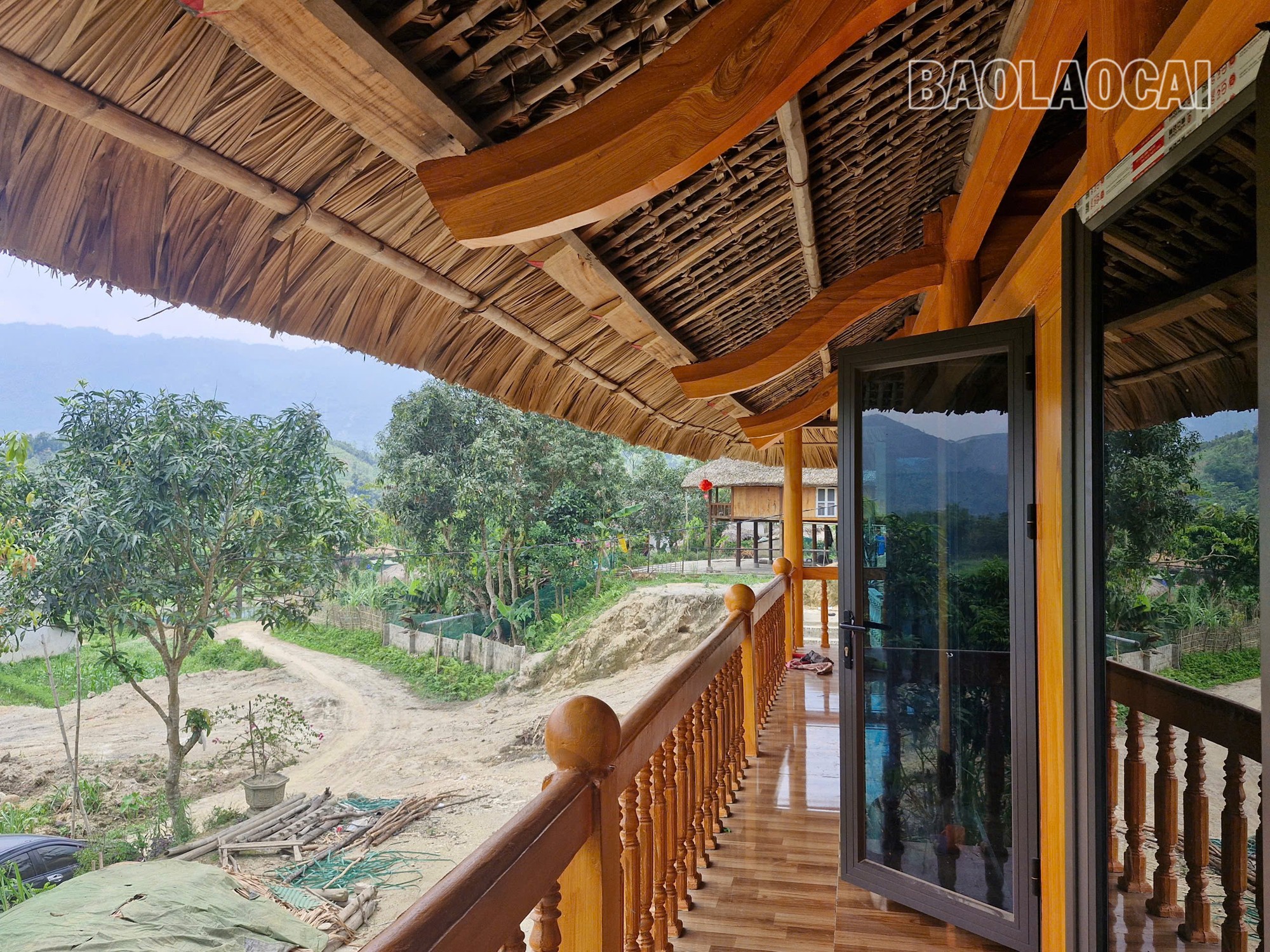
The spacious and solid concrete stilt house of Ms. Hoang Thi Thanh Thuy's family.
Talking to us, Ms. Hoang Thi Thanh Thuy shared: Because there was no wood to build a house and the cost of buying wood was high, the family chose to build with reinforced concrete and painted it to look like wood. The total cost of building the house was about 500 million VND. The concrete stilt house is more solid and sturdy than a wooden house, no need to worry about rain or flood, the space is spacious, airy, convenient for living. In particular, the floor is paved with marble, so it is both cool and convenient for daily cleaning. I am very happy that my family has built a stilt house in the Tay ethnic identity to live in and welcome relatives and friends to visit during the holidays.
Nam Cam village has 76 households, all of whom are Tay ethnic people. The whole village has 69 stilt houses, of which 60 are wooden stilt houses and 9 are new stilt houses made of concrete.
Not only in Nam Cam, but also in other villages and hamlets in Nghia Do commune, in the past two years, implementing the program of eliminating temporary houses and dilapidated houses, more and more concrete stilt houses have appeared to replace old and damaged houses. Although they are concrete stilt houses, most of them are roofed with palm leaves, and have wooden or bamboo walls, so they are still rustic, close, and in harmony with the scenery of Nghia Do village.
Meritorious Artisan Ma Thanh Soi, 81 years old, who is always concerned with preserving and maintaining the cultural identity of the Tay ethnic group, said: The Tay people have lived stably in this land since around the 15th century, using available materials such as wood, bamboo, and rattan to build stilt houses to suit living conditions and prevent wild animals.
Over historical periods, the architecture of the Tay people's stilt houses has changed to suit the natural and social environment, from tent houses, to ghost houses, Cai Tu houses, and then to 4-paneled stilt houses.
From 1990 to 2000, Nghia Do commune had about 80% stilt houses. Later, there were times when stilt houses were at risk of being lost, or some young people separated to build new houses to change the traditional stilt house architecture.
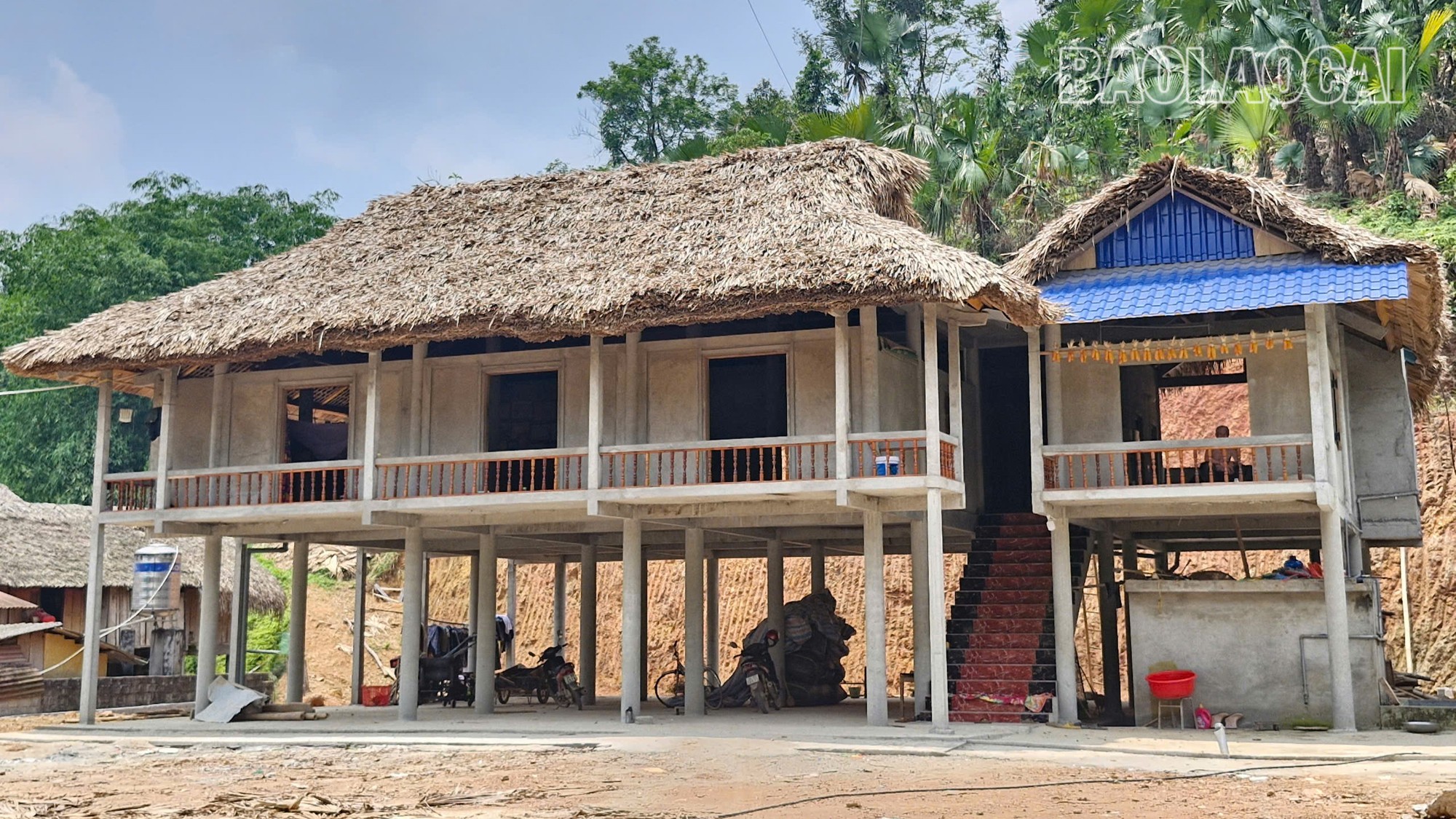
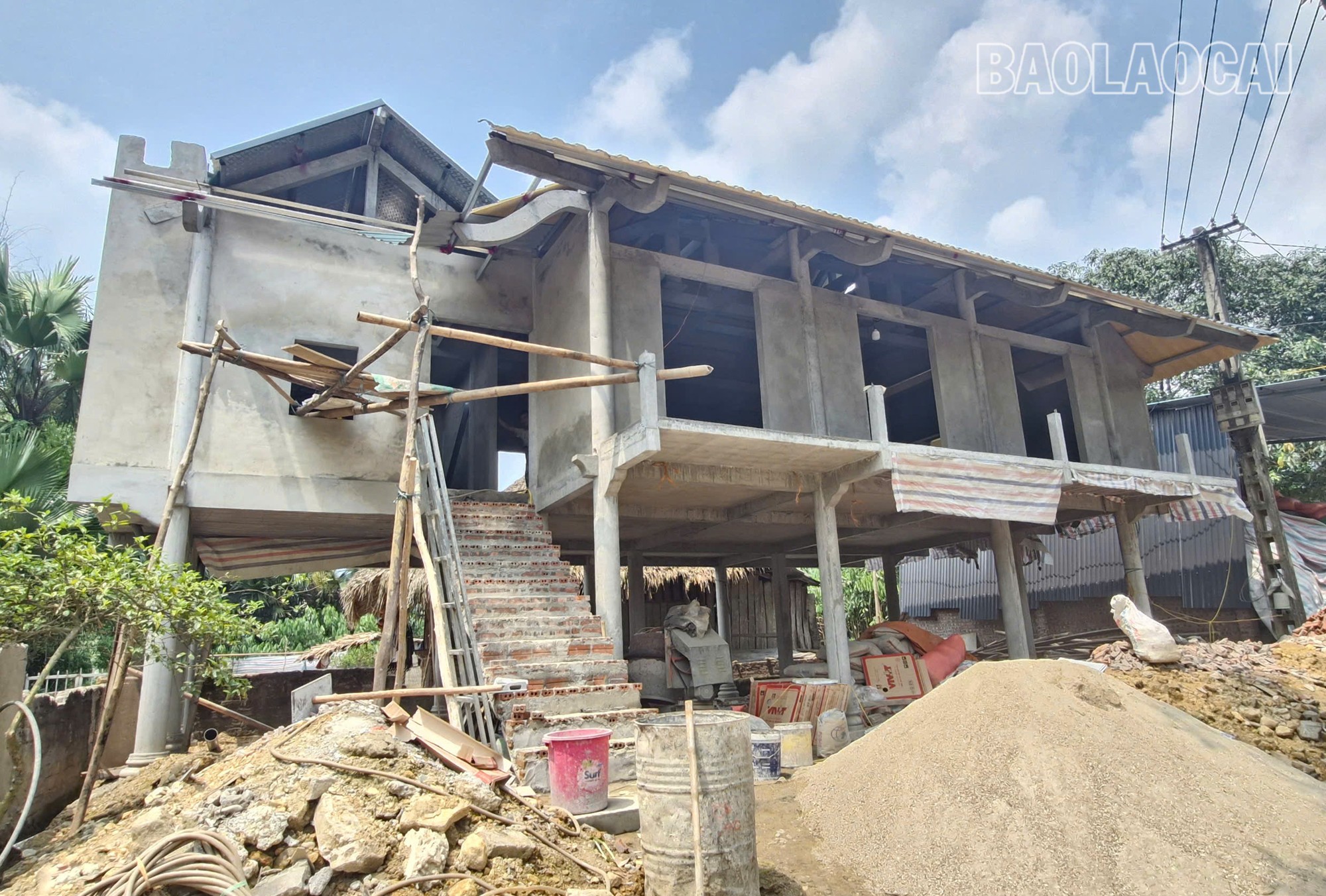
In recent years, many households in Nghia Do commune have built solid concrete stilt houses.
In recent years, the preservation of the Tay people's stilt houses in Nghia Do has received more attention. However, finding good wood to build houses is very difficult, the cost is very expensive, and building wooden houses also takes a lot of work. Therefore, when building new houses, many households choose the solution of building stilt houses with reinforced concrete frames.
No matter how good the craftsman is at making concrete stilt houses, the lines are not as soft, delicate, and graceful as wooden stilt houses, but they basically still retain the traditional architecture of the Tay people here, and are solid, sturdy, and convenient for living.
According to information from the People's Committee of Nghia Do commune, the whole commune currently has 13 villages with 1,188 households, 826 stilt houses, accounting for nearly 70% of the total number of households; of which 773 are wooden stilt houses and 53 are reinforced concrete stilt houses.
Most of the concrete stilt houses were built from 2024 onwards, many of which were built by people with the support of the State from the program to eliminate temporary and dilapidated houses.
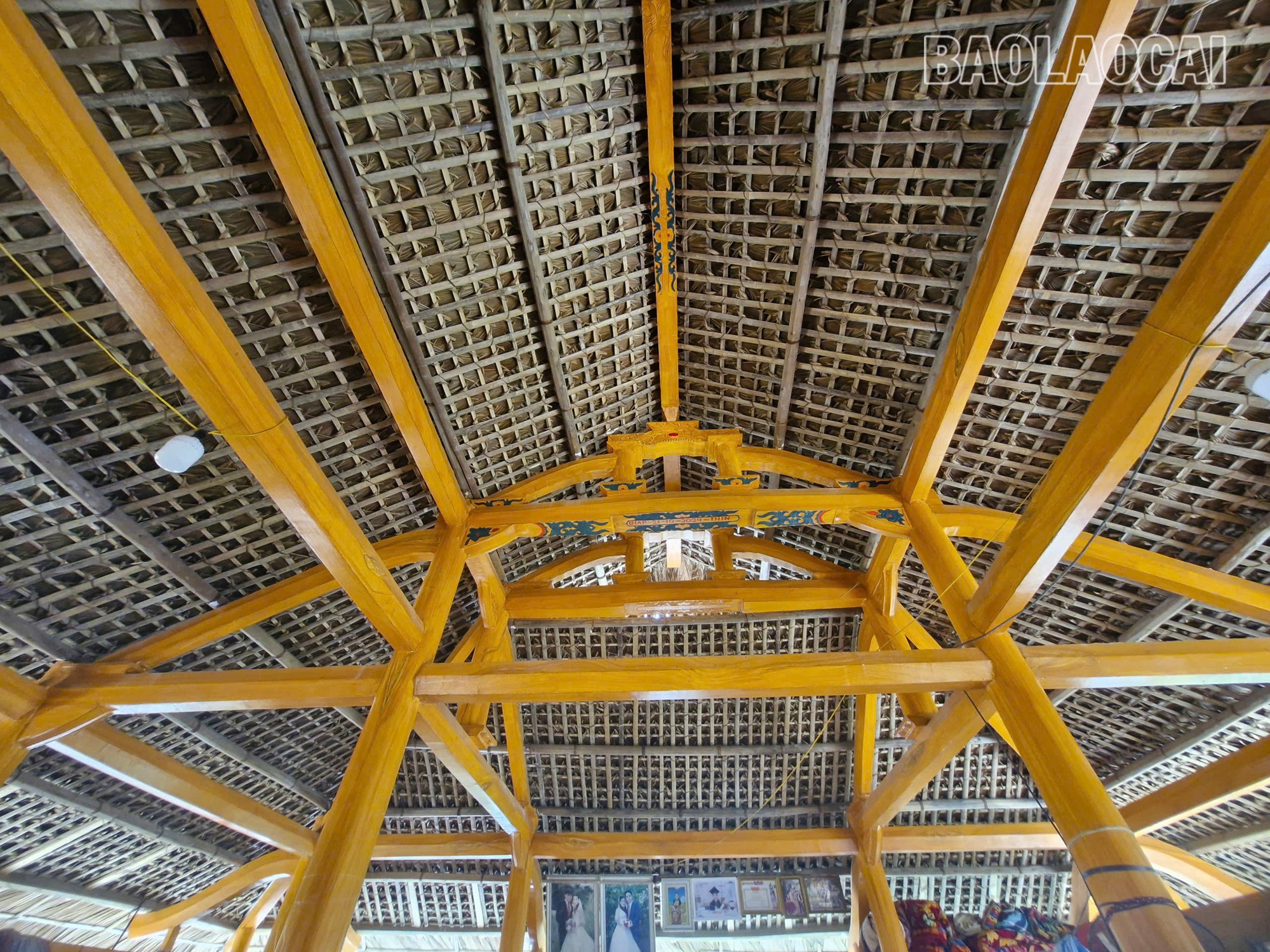
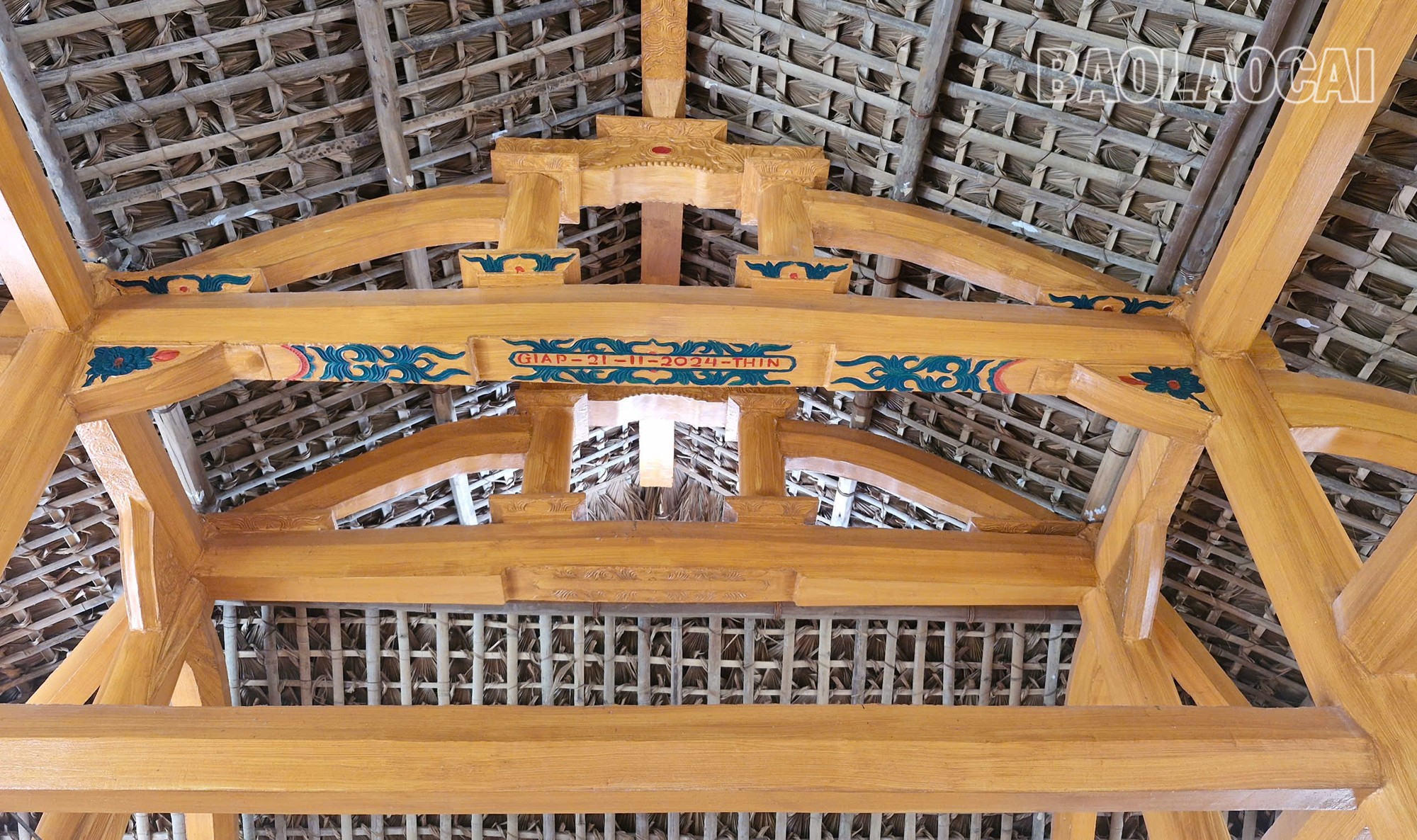
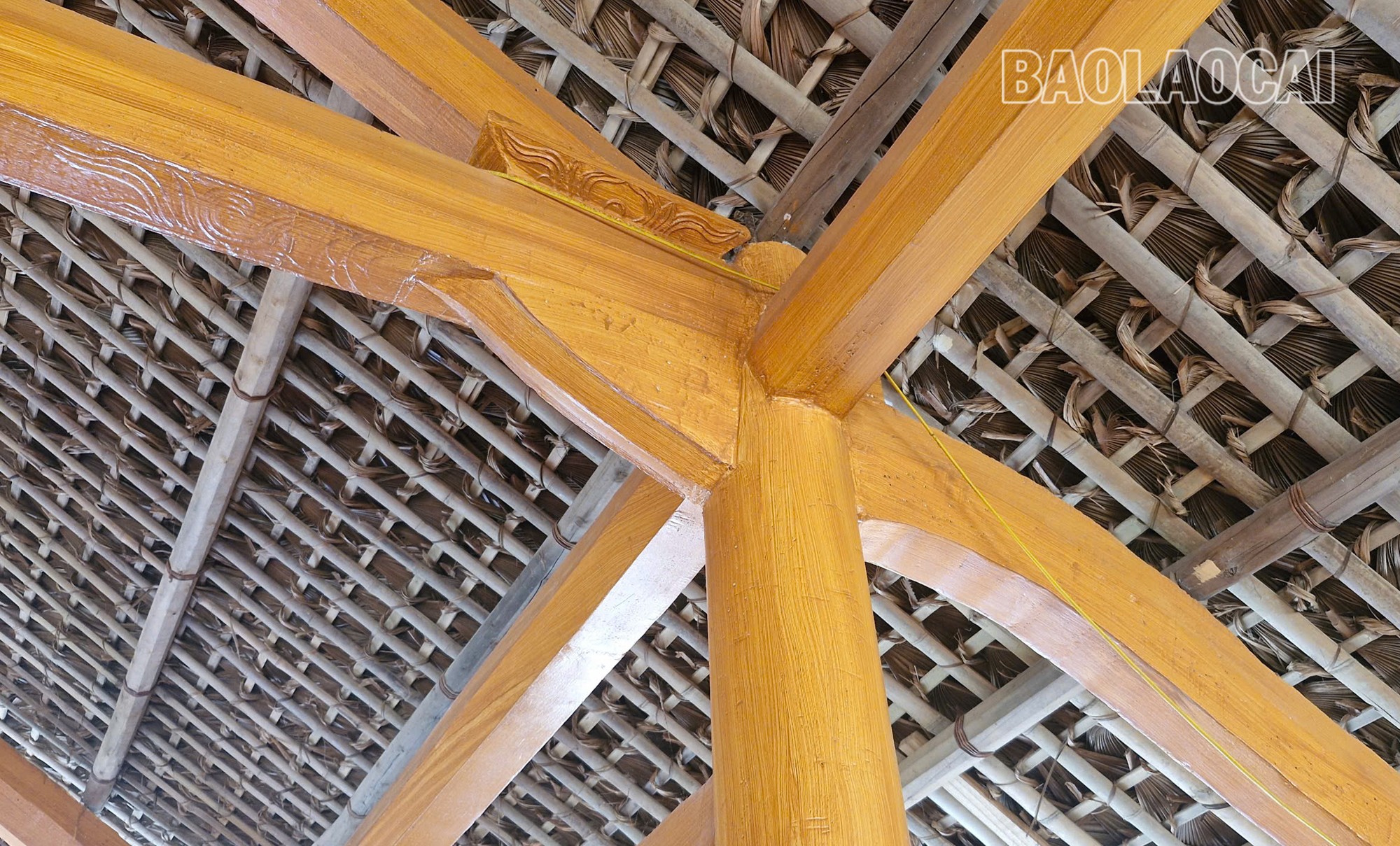
The concrete stilt houses retain traditional architecture.
Mr. Luong Cao The, Vice Chairman of Nghia Do Commune People's Committee, said: In the process of removing temporary and dilapidated houses in the commune, the Party Committee and the government are very concerned about preserving the traditional stilt house architecture of the Tay people, not losing traditional stilt houses, interspersing houses with disharmonious architecture, destroying the beauty of the villages.
The practical solution is to build reinforced concrete stilt houses instead of wooden materials. When researching the concreting of traditional stilt houses, the commune consulted with artisans and the elderly in the villages to ensure the architectural aspect.
The Government’s program to eliminate temporary and dilapidated houses demonstrates a noble humanitarian spirit, helping poor households with economic difficulties to have stable housing. However, in the process of eliminating temporary and dilapidated houses in many places, the issue of preserving the architecture of ancient and traditional houses is of great concern.
The solution of building reinforced concrete stilt houses while still maintaining the traditional stilt house architecture of the Tay people in Nghia Do commune is very practical, economical, and environmentally friendly. Thereby, contributing to preserving the traditional stilt house architecture of the Tay people, serving the development of community tourism, building Nghia Do commune into an attractive, unique, and friendly destination for tourists.
https://baolaocai.vn/bao-ton-nha-san-truyen-thong-o-nghia-do-post401611.html