Journey for the "soul" of the Dao people's Tang Sanh drums
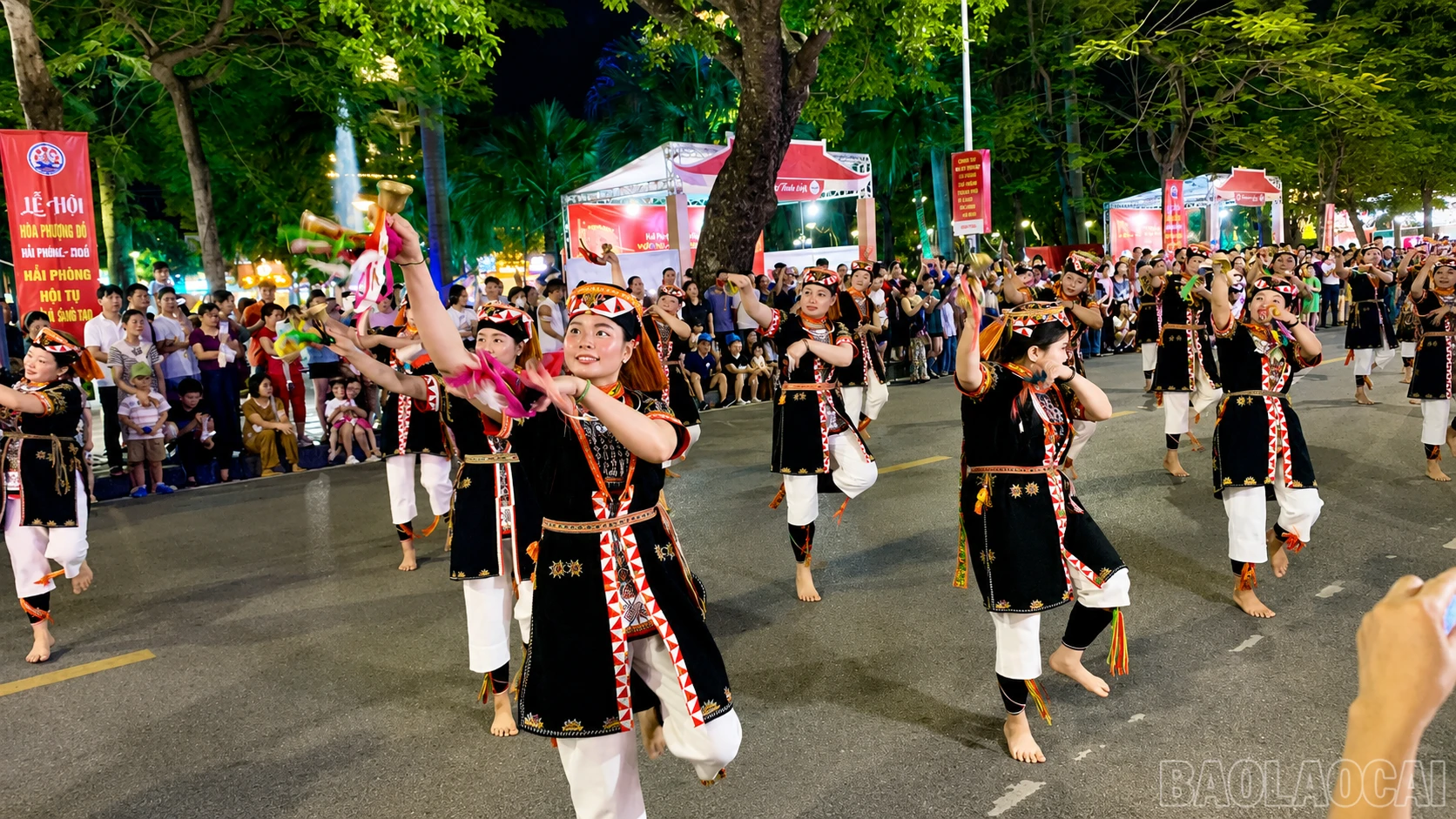
The Tang Sanh drum (also known as the clay drum) is a unique musical instrument of the Dao community in Lao Cai. Due to numerous changes of life, at present, the craft of making Tang Sanh drums has been lost. There are few drums left in the province. However, the soul of the Tang Sanh drum is still intact in the Dao people's festivals and New Year's such as the Cap Sac ceremony, Put Tong ceremony, and New Rice celebration, etc.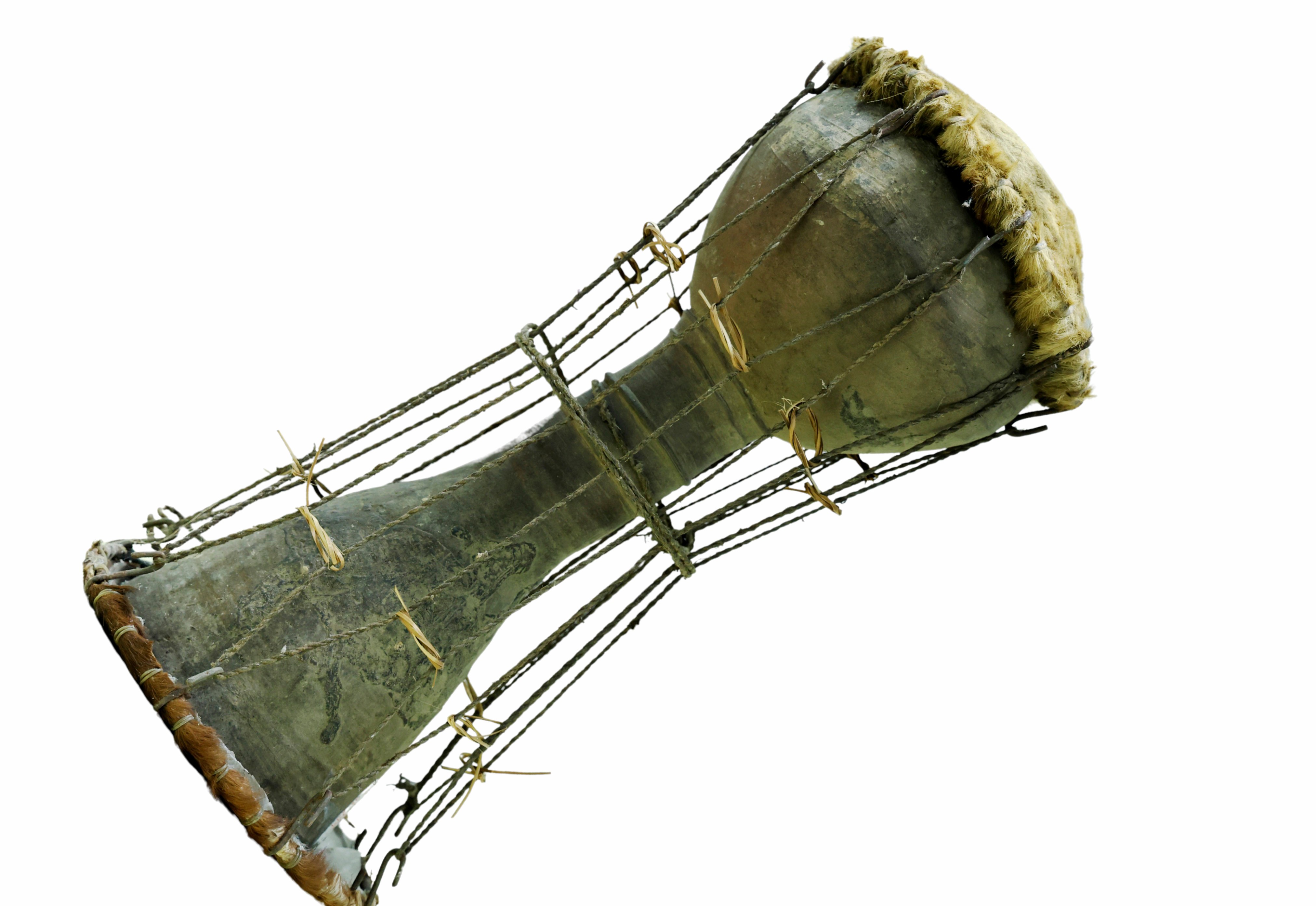
Tang Sanh drum of Dao people, Son Ha commune, Bao Thang district, preserved at the Provincial Museum.
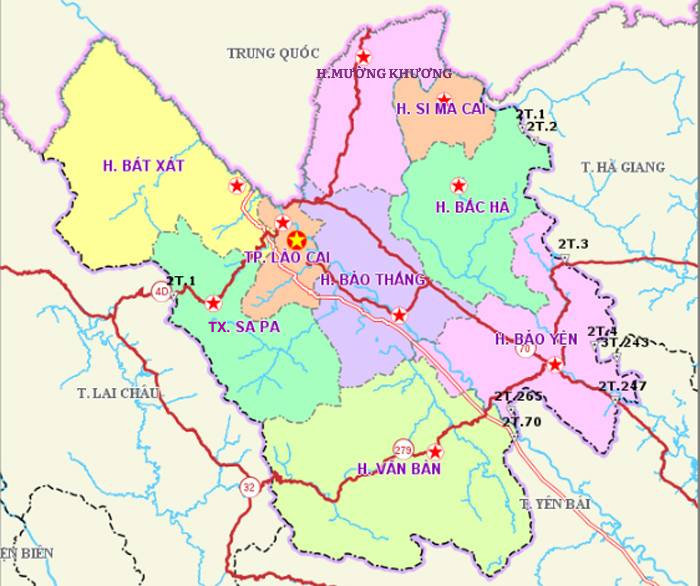
To learn more about the Dao people's Tang Sanh drums, we went to the Provincial Museum, which preserves thousands of artifacts of the Lao Cai ethnic groups. This place is preserving 3 Tang Sanh drums, of which 2 were donated by a Dao family in Thanh Binh commune, Muong Khuong district in February 1998 and 1 was donated by a Dao family in Son Ha commune, Bao Thang district in December 2022.
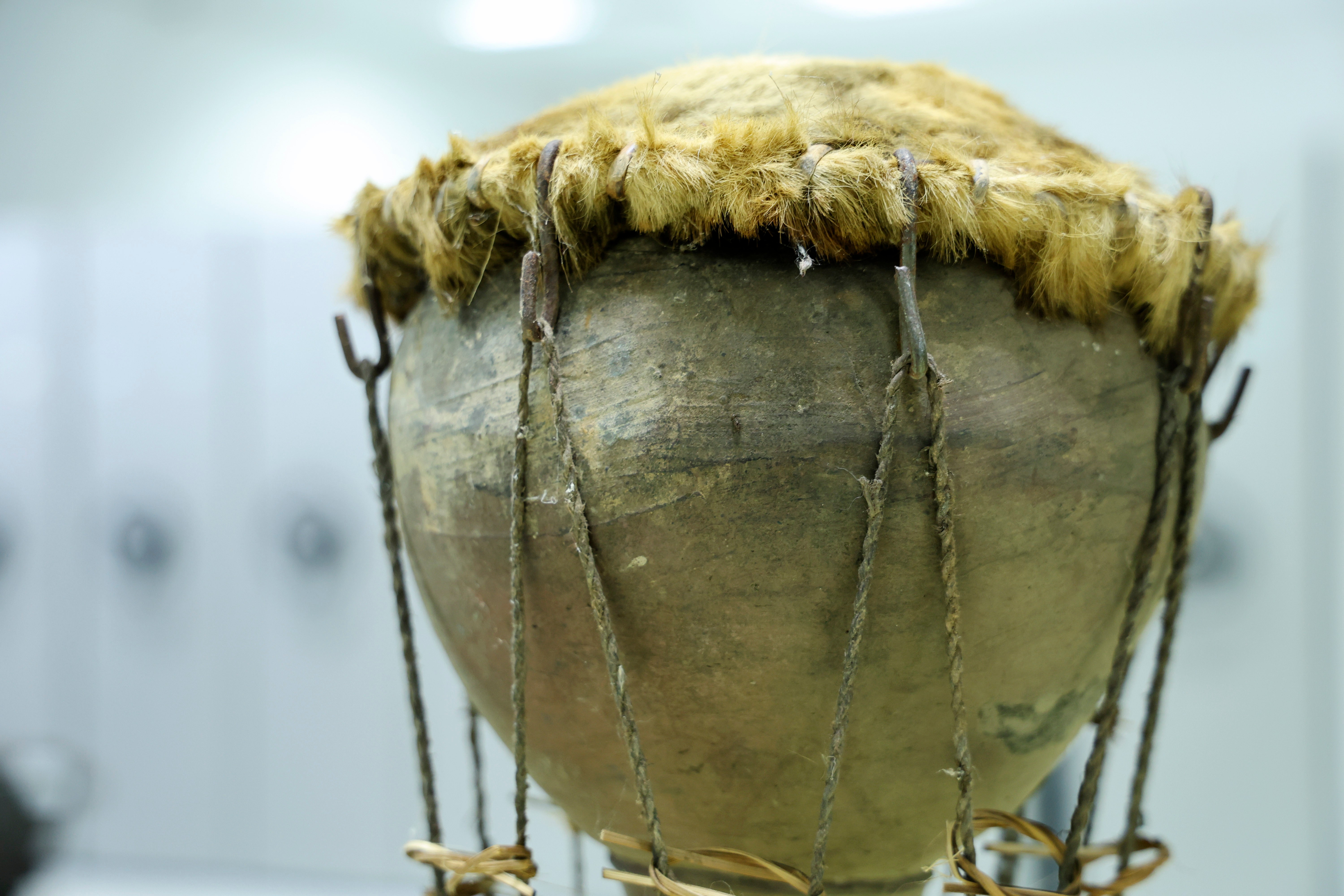
The drum head is covered with muntjac skin.
The Tang Sanh drums, though collected from two different locations, share similar shapes, sizes, and materials. Unlike conventional drums which typically have cylindrical wooden bodies, narrowing at both ends and bulging in the middle, tang sanh drums feature a shell made of molded terracotta or ceramic. The drum body is divided into three sections, with a narrow waist at the center. One end resembles a salt jar, while the other flares outward like a trumpet. Both drumheads are covered with animal hide and reinforced with metal hoops (usually copper or iron) that serve as pressure points. Tightening ropes are used to ensure the drumheads are stretched as tautly as possible for optimal sound quality.
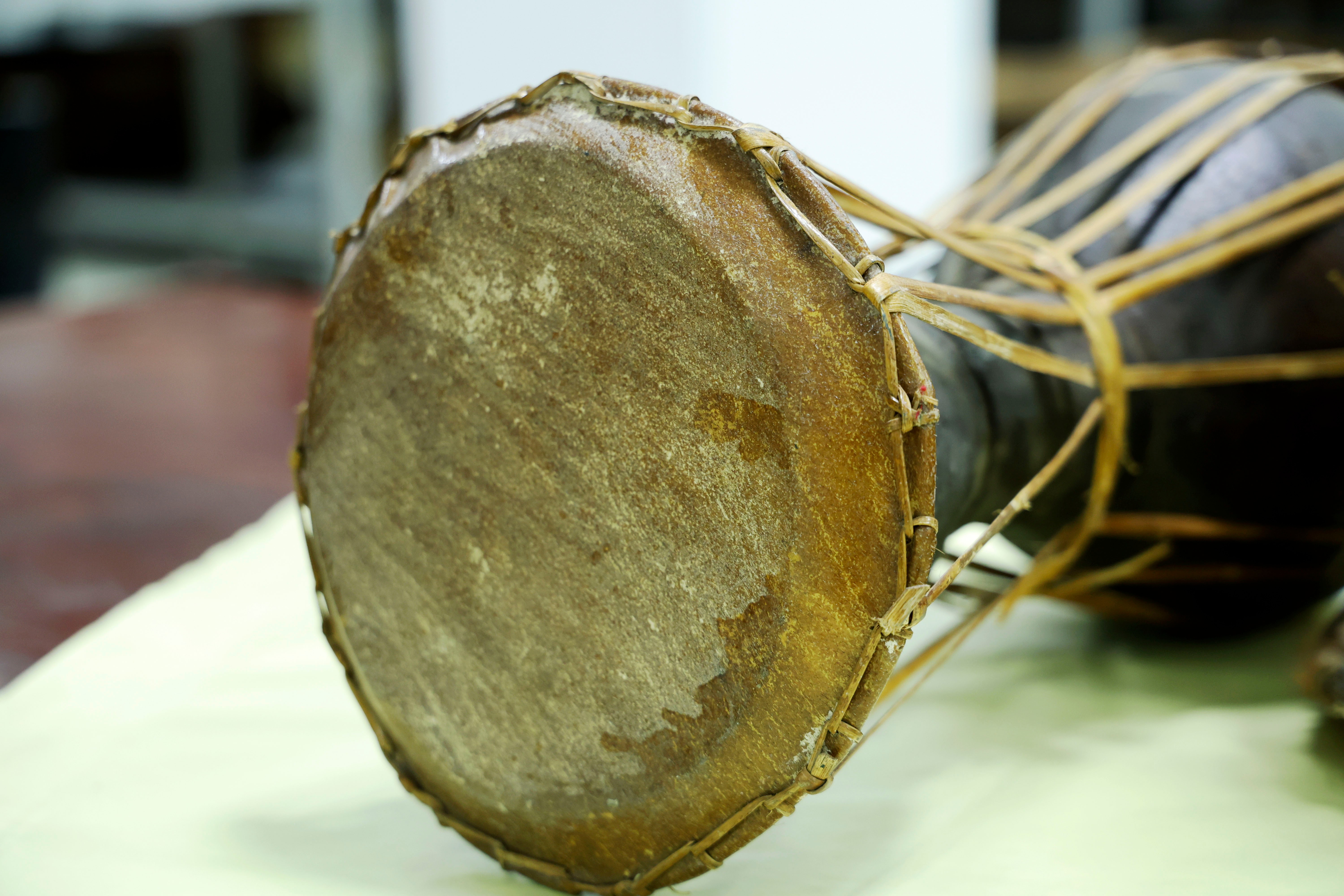
One side covered with wild goat skin.
The differences between the two drums are minimal: the ones owned by the Dao community in Thanh Binh Commune measure 47 cm and 49 cm in height, with the widest diameter being 20 cm and 21 cm respectively. The drumheads are tensioned using rattan cords, and the drum shells bear the inscription “Thuong Nguyen Co”. The animal hide covering the drumheads is smoothly tanned.
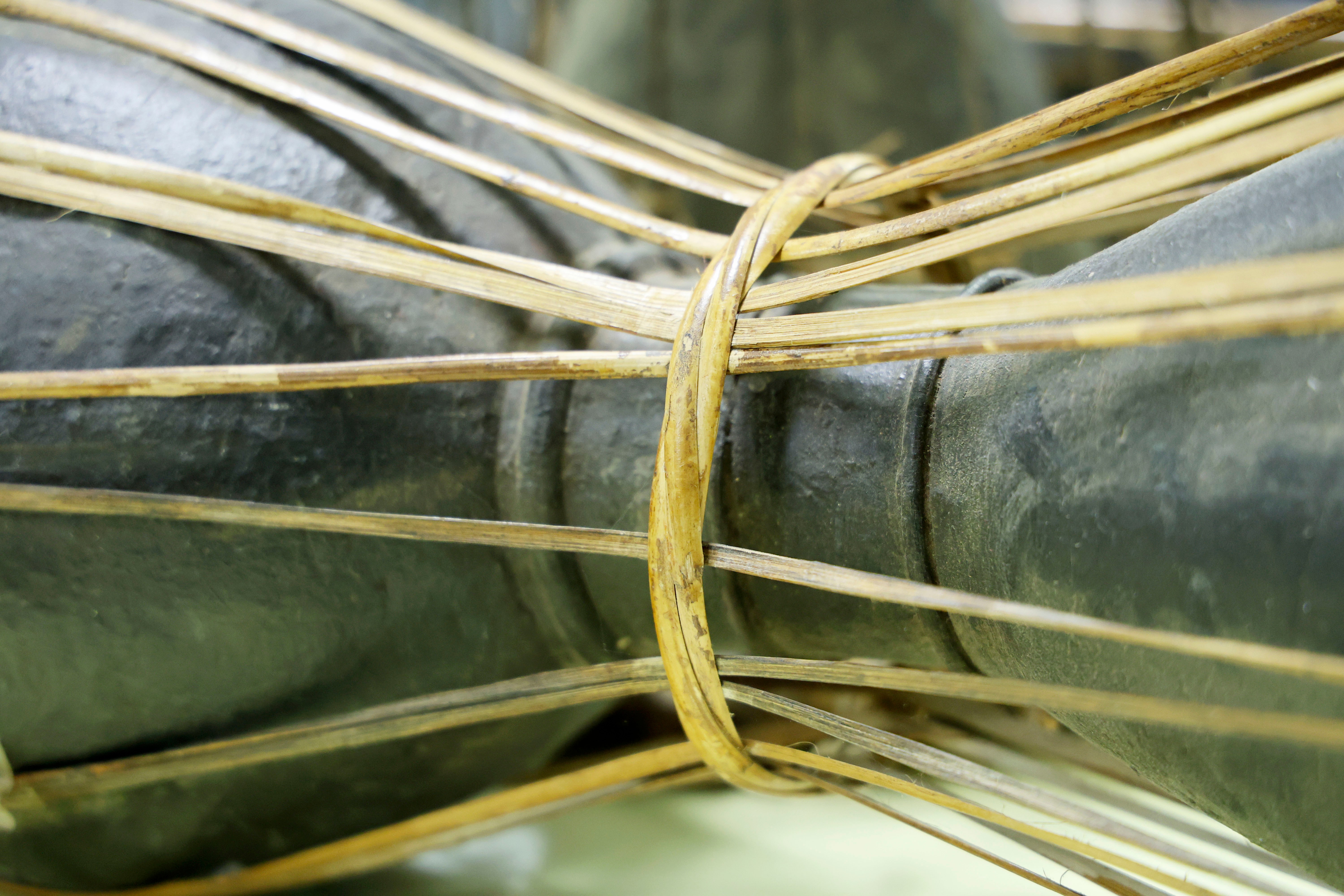
The two drum heads are held tight by rattan fibers.
The Tang Sanh drum of the Dao people in Son Ha commune is 60 cm high without words on the drum body. The drum body is tied with woven jute and the drum face is animal skin with the fur intact. The noticeable point here is that the materials used to make the drum are very durable. For instance, the 2 drums of the Dao people in Thanh Binh commune, after 27 years of storage at the Lao Cai Provincial Museum, are still intact, with the skin and strings that stretch the drum face are not damaged by termites.
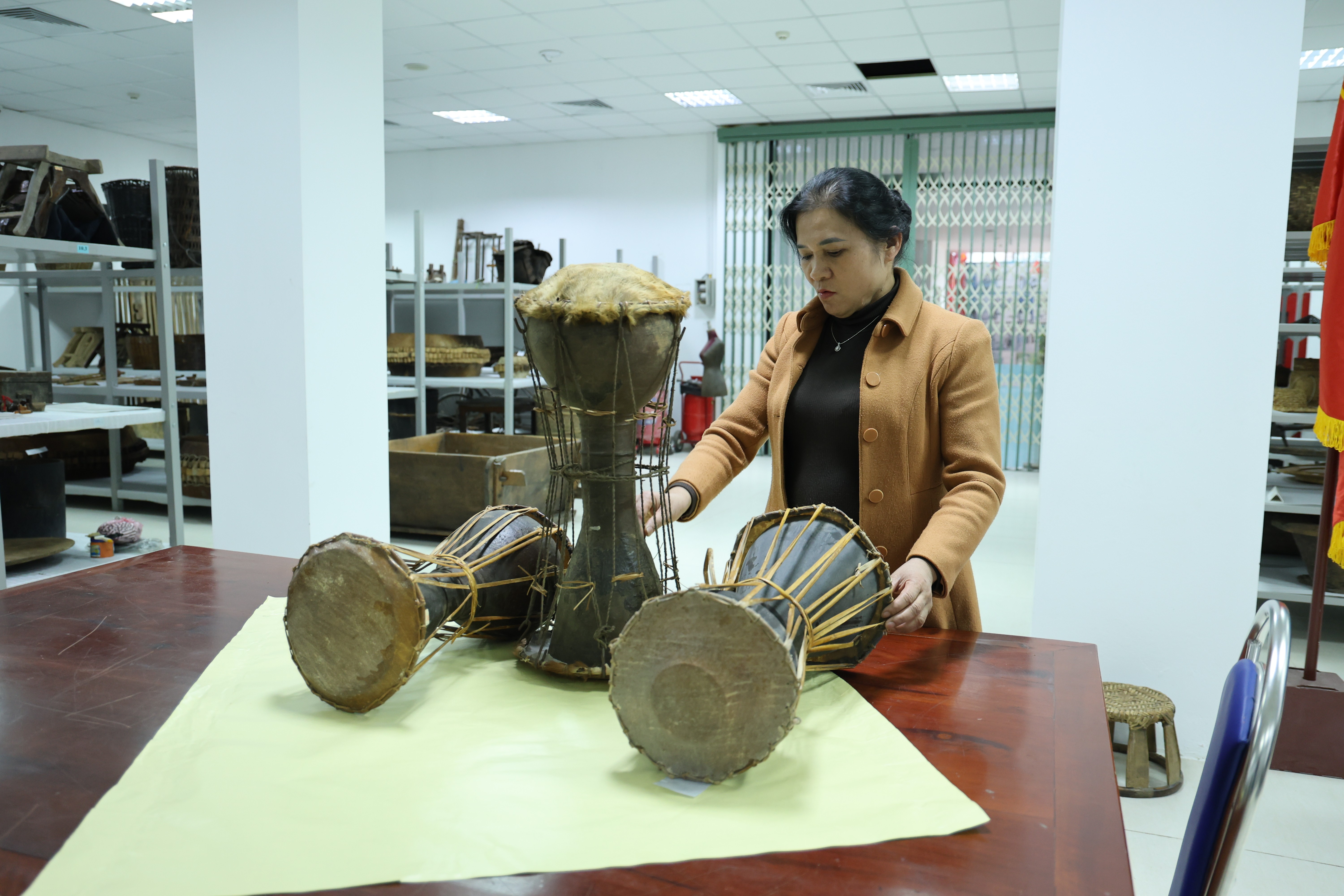
Three Tang Sanh drums of the Dao people in Son Ha commune (Bao Thang) and the Dao people in Thanh Binh commune (Muong Khuong) being kept at the Lao Cai Provincial Museum.
Facing difficulties in finding the former owners of two drums in Thanh Binh commune, we went to meet Mr. Ban Van Sang in Khe Mu hamlet, Son Ha commune, Bao Thang district. He is the person who donated a family heirloom, which was preserved through many generations, to the Lao Cai Provincial Museum. Mr. Sang shared that his family used to own three Tang Sanh drums. One was donated to the Vietnam Museum of Ethnology in Hanoi, another to the Lao Cai Provincial Museum, and the third remains in the family's possession. All three drums share the same height of 60 cm and are made from ceramic materials.
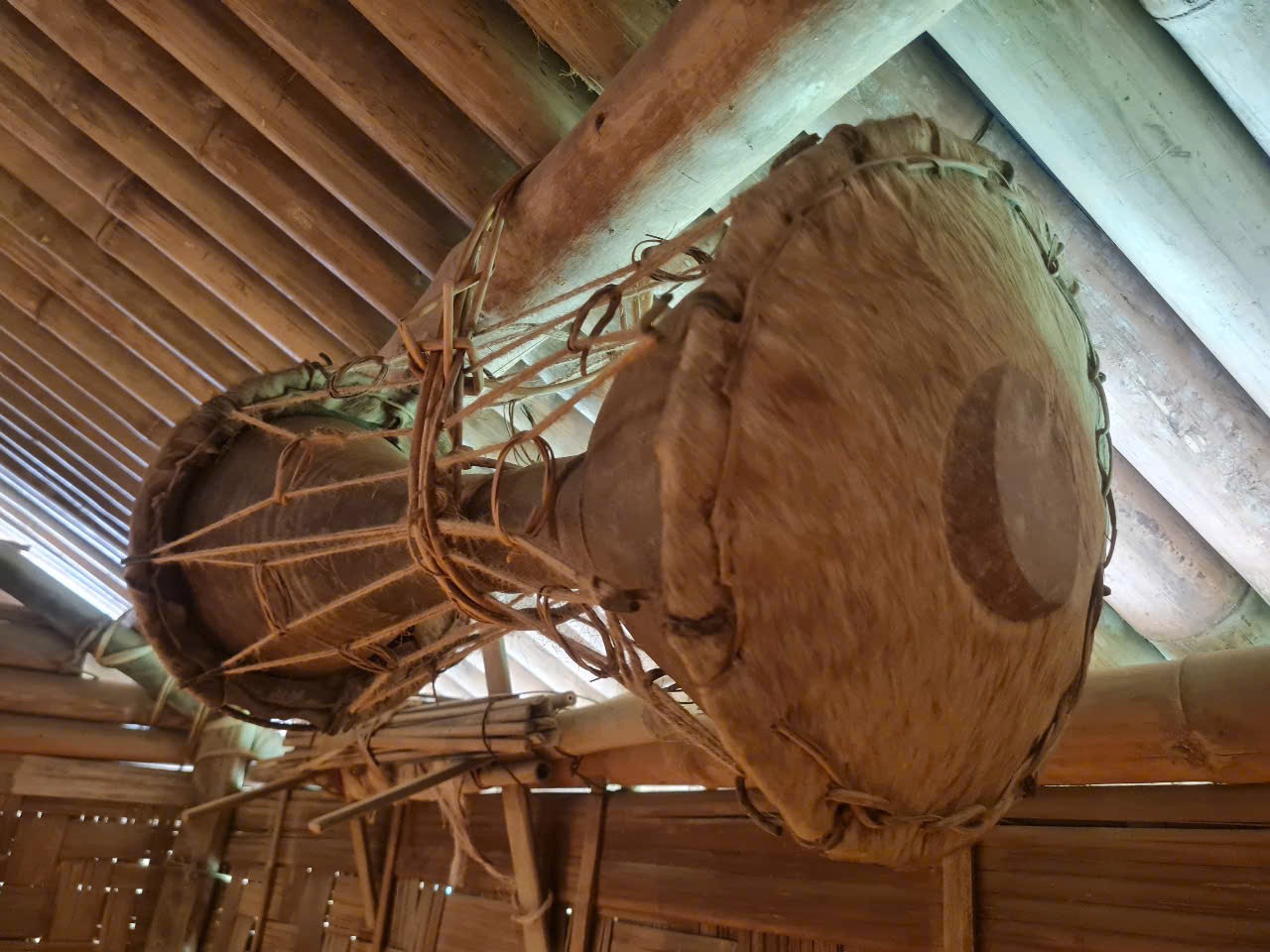
The Tang Sanh drum of the Dao people in Son Ha commune collected by the Vietnam Museum of Ethnology in Hanoi and is currently on display for visitors to see and enjoy.
The drum kept at the Museum of Ethnology has two heads made of muntjac skin with intact fur; the drum at the provincial museum has one head made of muntjac skin, and the other one is made of goatskin; as the drum kept at his home is damaged, the owner is temporarily stretching it with 3 layers of durable fabric. Since the drum head is made of fabric, it is only symbolic and thus used for dancing rather than playing music. When tapping the drum face made of fabric, there is only a thump sound, not the boom boom sound like the drum head that is made of animal skin.
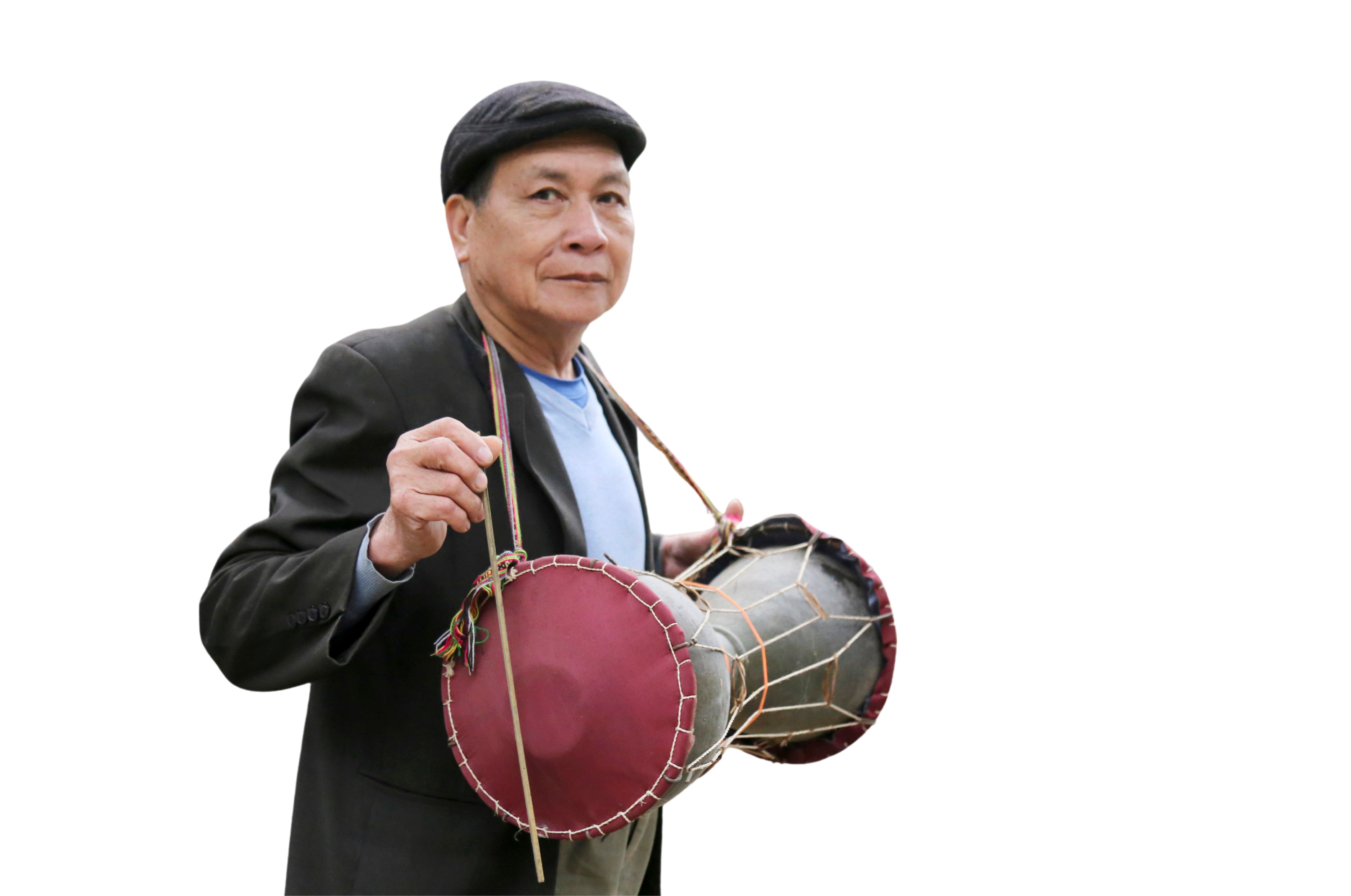
Mr. Ban Van Sang, Khe Mu village, Son Ha commune (Bao Thang) after donating 2 ancient drums to the Vietnam Museum of Ethnology and the Provincial Museum, only had left a drum with 2 heads covered with fabric. The drum is rather a symbolic item than a musical instrument.
In addition to the Tang Sanh drum, Mr. Ban Van Sang also keeps a gong, two ancient bronze cymbals and musical instruments used for traditional tang sanh drum dances during festivals and New Year. The Tang Sanh drum is the main instrument in the drum dance ceremony. The player will wear the drum on his chest and use his hands or bamboo sticks to hit the drum heads under the rhythm. The other players will use bronze cymbals to consonant with the drum.
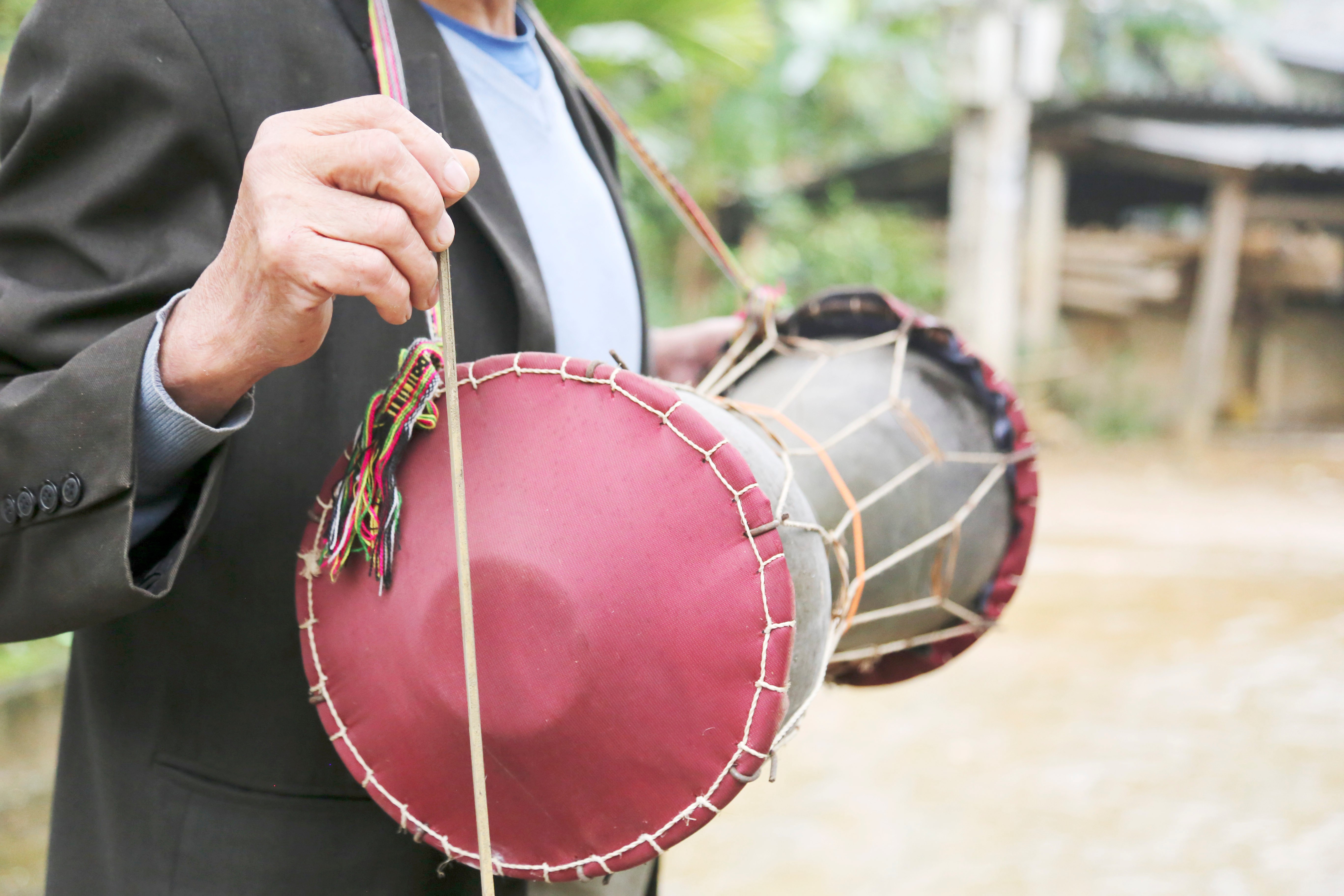
For Tang Sanh drums, players can tap them with bare hands or bamboo sticks to make sound.
Mr. Ban Van Sang is 75 years old this year and he is still healthy and clear-headed. Nearly 10 years ago, he was recognized as an artisan for his contribution to the cultural activities of the Dao people's Tang Sanh drum dance. Artisan Ban Van Sang is now still participating in traditional Tang Sanh drum dances on occasions namely Cap Sac, Put Tong, new rice celebration, etc.
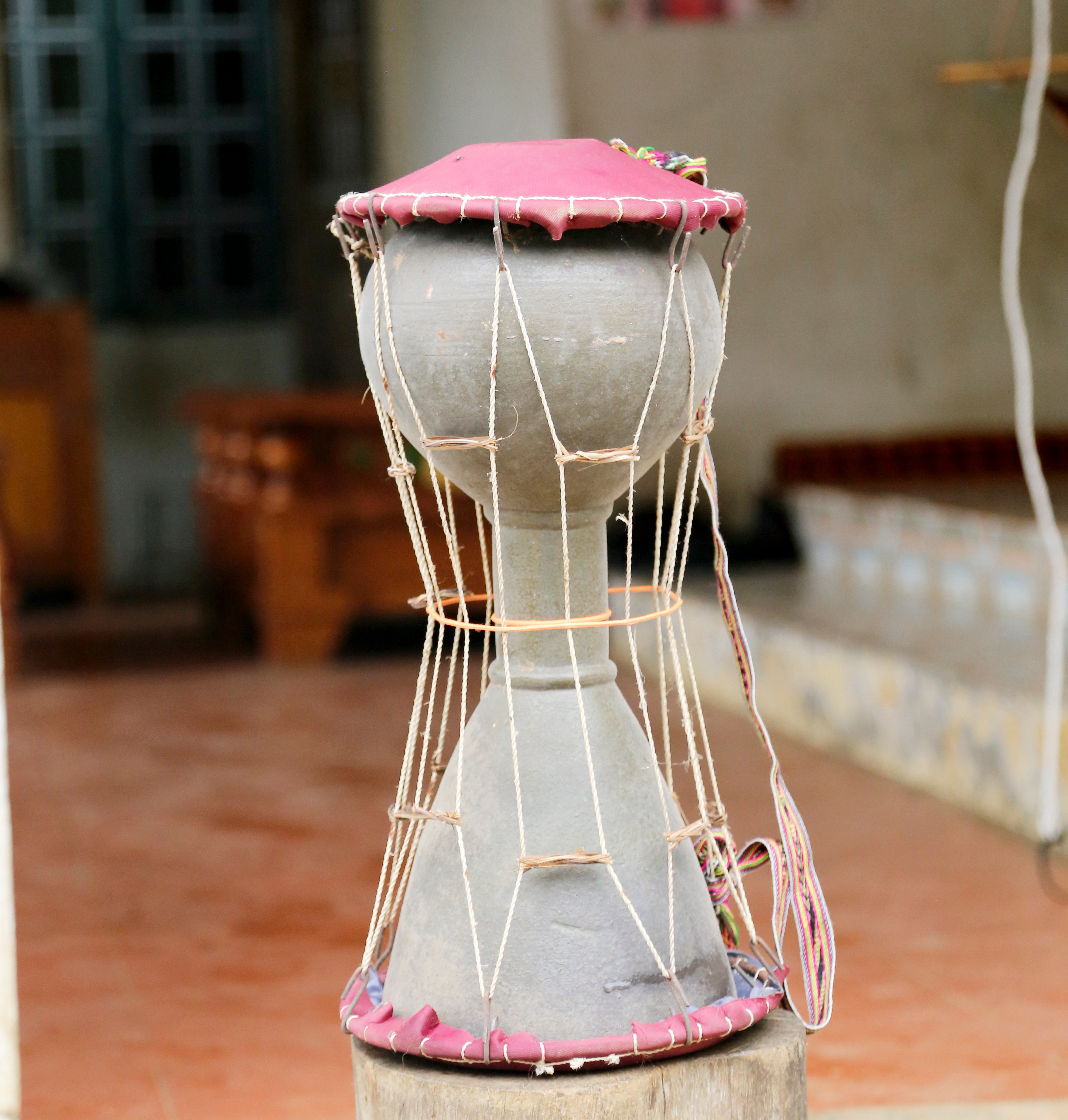
The craft of making Tang Sanh drums is gradually disappearing in Lao Cai.
In Son Ha commune or some communes in Bao Thang district where the Dao people live in a concentrated community, few people are able to preserve the drum or the way to dance with the Tang Sanh drum. As per Mr. Sang, the reason is that the Tang Sanh drum is made quite thin to create a resonant sound, thereby it is very fragile and breakable. Meanwhile, the procedure of making the drum is very complicated, going through many stages. Although Mr. Sang has spent a long time searching and contacting many places inside and outside the province, so far, he has not met anyone who still keeps the art of making Tang Sanh drums. "Maybe it is completely lost", Mr. Sang said in a somber voice.
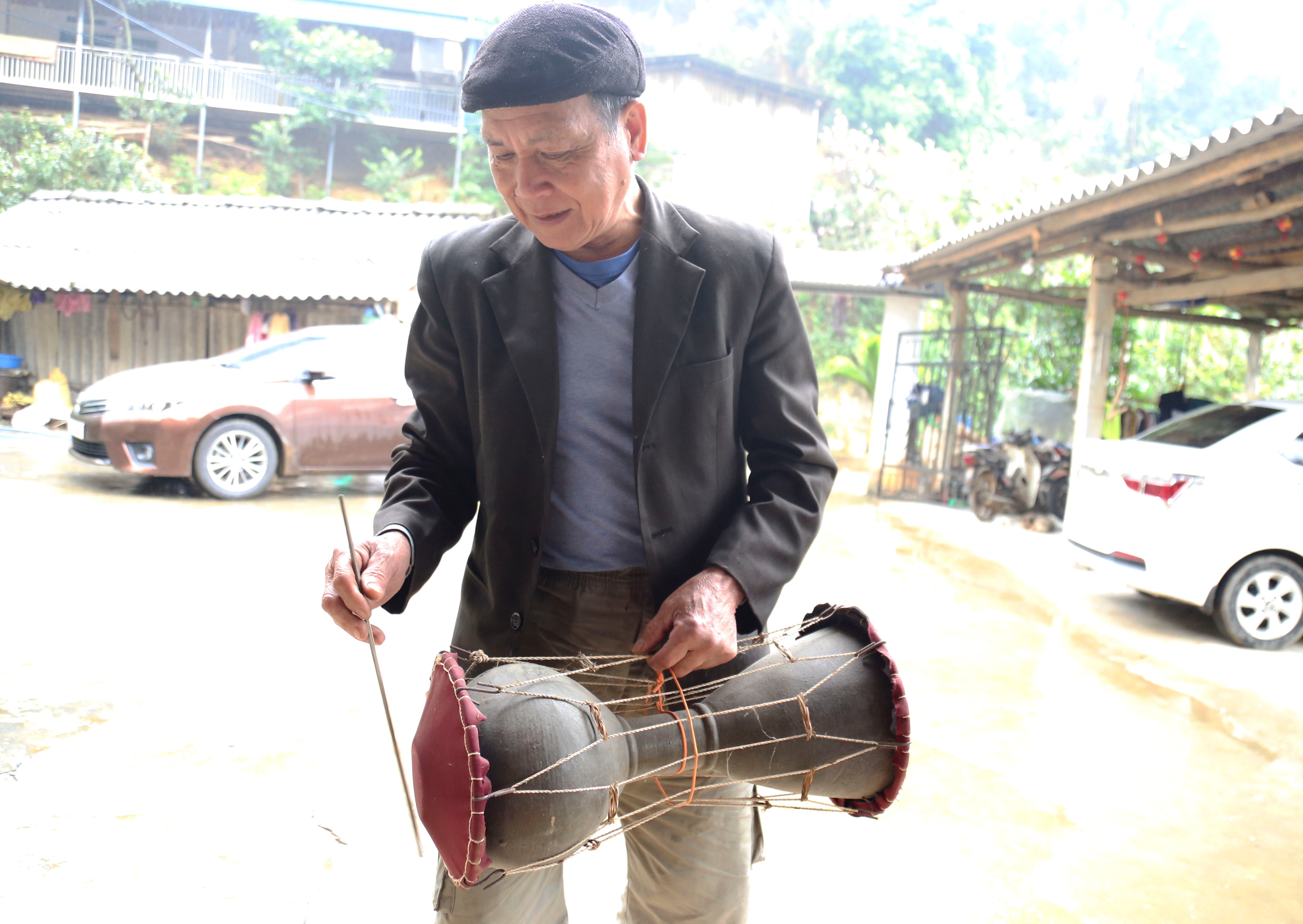
The concern for the soul of the Tang Sanh drum is clearly visible on the face of artisan Ban Van Sang.
What Mr. Sang still remembers is that when he was just as tall as a buffalo's belly, he had already accompanied the adults a few times to watch them cast and fire the drums. He recalls the meticulous and elaborate process of filtering and kneading the clay, shaping the molds, forming the drum bodies, and the careful calculations involved in the firing stage. Perhaps it was these strict and demanding techniques, along with the scarcity of materials for making the drumheads that gradually led to the decline of the Tang Sanh drum-making craft?.
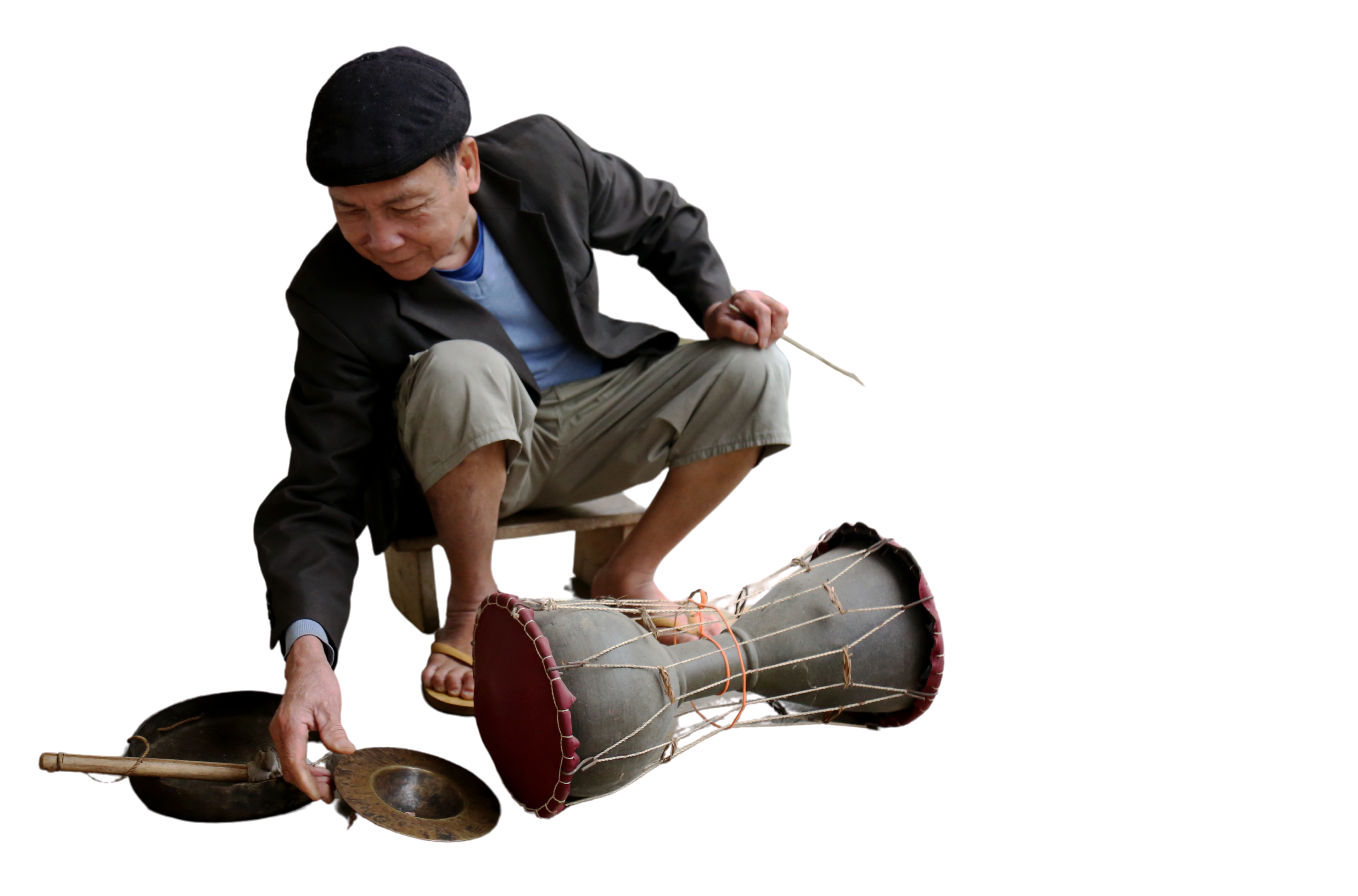
In addition to the Tang Sanh drum, Mr. Ban Van Sang also preserves a set of ancient bronze gongs used for drum dance activities in cultural ceremonies of the Dao people.
“Is there any way to revive this craft, sir?” I asked. After a long moment of contemplation, artisan Ban Van Sang spoke: “It’s not actually that difficult. If we send a sample drum to traditional craft villages like Bat Trang, they could reproduce it right away. But for an individual to take this on alone would be very challenging. It requires support from government agencies, local authorities, and the involvement of the community in cultural preservation efforts.” After parting with artisan Ban Van Sang on a drizzly spring afternoon, we felt a lingering sense of wistfulness and regret for a traditional craft that is so rich in heritage and identity - the craft of making Tang Sanh drums of the Dao people.
https://baolaocai.vn/di-tim-hon-trong-tang-sanh-cua-nguoi-dao-post398341.html