Along the Nam Tu River

In the autumn days of September, upstream of Tu Thuong mountain (Nam Xe commune, Van Ban district), we came to the village of the H'mong - a very small ethnic group, also the only place in Vietnam where the Hmong live.

Regularly maintain cultural activities, traditional arts of our nation

The gentle Nam Tu stream originates from the top of a high mountain and runs down to bend around the village of Tu Thuong. The terraced fields in the ripe rice season are bright yellow, with a couple of fields that people have just harvested. It was interesting when we were immersed in the Hmong folk songs and dances of the couples who made love, threw con, danced the flute, sang the pipe... We experienced watching Hmong women weave cloth, embroider brocade, and watch Hmong men knitting. In particular, the people here still preserve and preserve many traditional rituals and customs with the cultural beauty of the Blue Mong ethnic community such as: the custom of painting on eggs, pounding shoe cakes on the Lunar New Year... 

Artists pass on knitting to people in the village

Not only developing the economy, building a new countryside, and creating a peaceful and prosperous village, the Blue H'mong people on Tu Thuong mountain are still united, together promoting the national cultural identity, creating the flavor of "25 colors" flowers" in the highlands bordering Lao Cai.

Hmong Khen performance and Mong folk singing by the stream

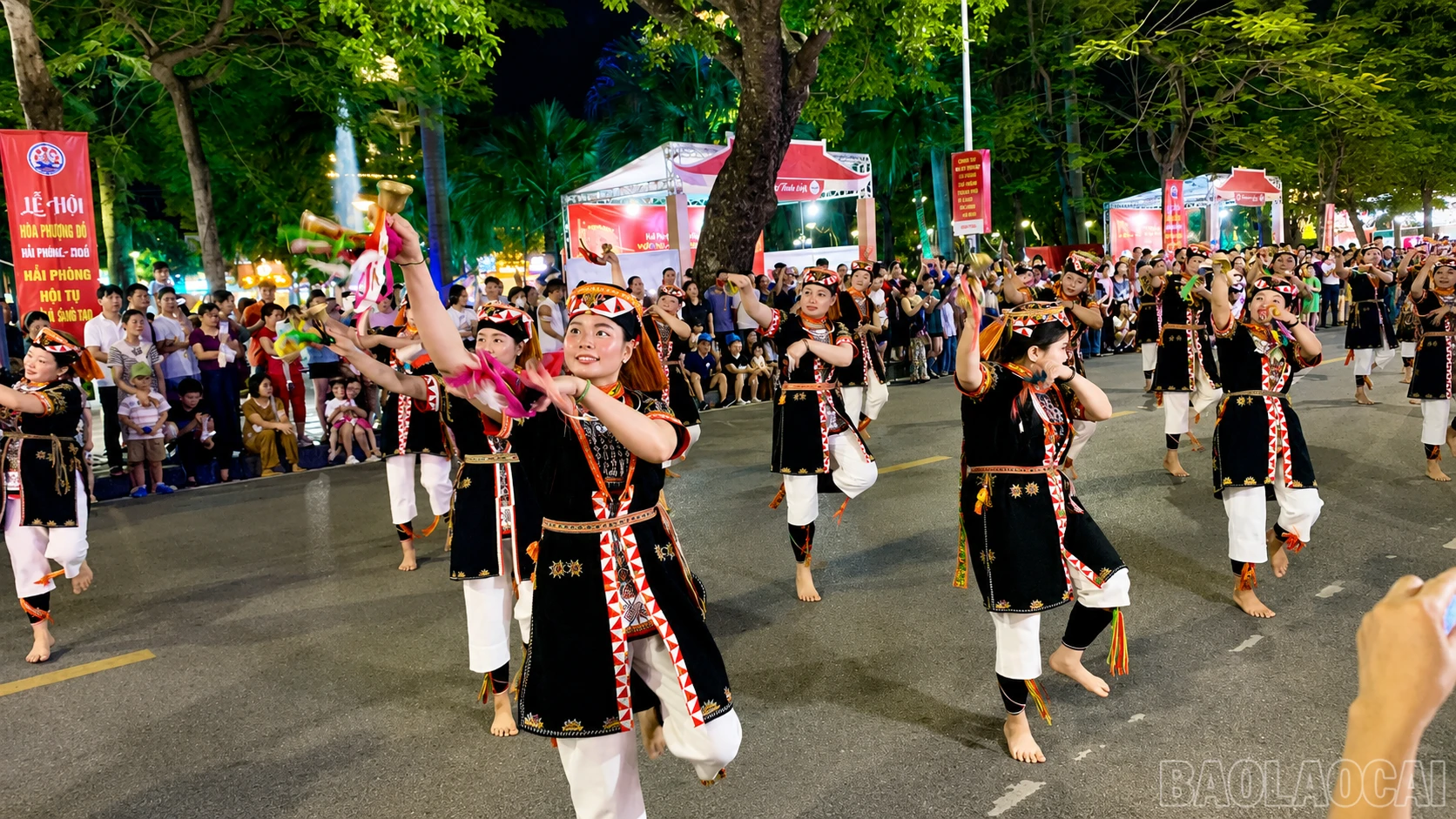
Charming in traditional costumes

H'mong people in Tu Thuong unite to preserve their cultural identity

Regularly maintain cultural activities, traditional arts of our nation

Performing the art of tubes singing

Blue Hmong boys and girls happily throw in the festival.
Le Thanh Cuong

Related Posts

Ceremony to announce and receive the Certificate of ranking as a provincial-level scenic relic for Ngu Chi Son peak

On the evening of May 30, at the Tennis Court, the People's Committee of Sa Pa town held a ceremony to announce and receive the Certificate of ranking as a provincial-level scenic relic for Ngu Chi Son peak and a special art program "Sa Pa - the aspiration to rise".

Inauguration of the first community reading library in Lao Cai city

On May 31, the first community reading library in Lao Cai city officially opened in the small park area of residential group 7, Nam Cuong ward. This is a project implemented by the Party Cell and mass organizations of Residential Group 7 to create a space for learning, entertainment and spreading reading culture in the community.

Following the Red Dao people into the forest to find medicinal leaves

In the treasure trove of indigenous knowledge of the Red Dao people in Phin Ngan commune, Bat Xat district, for a long time, people have known how to use many types of forest plants to make valuable remedies to cure diseases. Once following the people into the forest to find medicinal plants, we understood more about the traditional medicine profession of the people here.

Lao Cai – From the center of ancient Vietnamese settlement to the center of international trade connection

On December 20, 2024, the Government issued a Plan to develop Lao Cai into a center for connecting economic trade between Vietnam and ASEAN countries with the Southwest region of China. In which, Lao Cai city is the center of that connection journey. Looking back at the long history of this borderland, we can see that in historical periods, Lao Cai has always been a center, a connection and...

Keeping the fire of indigenous knowledge alive in Ban Pho corn wine

The mountainous district of Bac Ha (Lao Cai) is known as the “white plateau” in the middle of the Northwest sky. Not only famous for its majestic landscape and unique H'Mong villages, this place is also known for Ban Pho corn wine - a unique product crystallized from rocky mountain corn, wild yeast and the talented hands of the indigenous people. Not simply a drink, corn wine is also a...

Lao Cai recognized 2 more national intangible cultural heritages

Two national intangible cultural heritages were recognized: the weaving craft of the Tay people in Nghia Do commune, Bao Yen district and the forest worship ritual of the Pa Di people in Muong Khuong district.