Don Bac Ha is recognized as a Provincial historical and cultural relic

The Provincial People's Committee has just issued Decision No. 3753/QD-UBND on October 22, deciding on the ranking of Don Bac Ha as a provincial historical relic.
Don Bac Ha ruins. (Documentary photo)

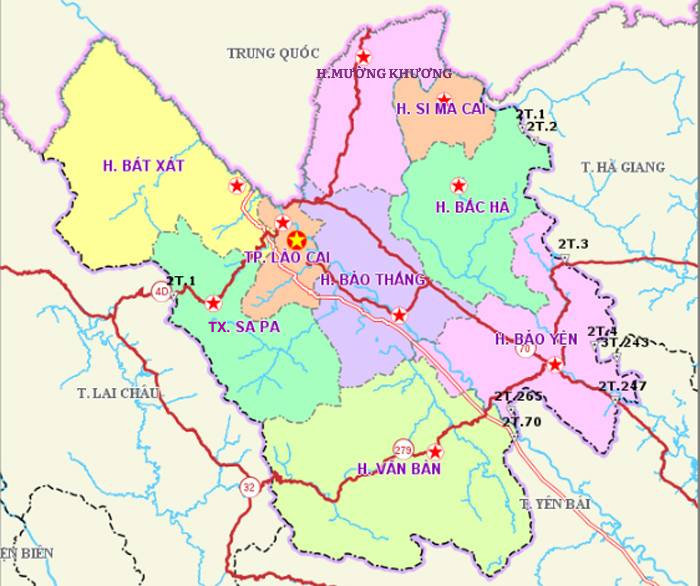
Bac Ha garrison is a large-scale military garrison in the garrison system of the French colonialists in Lao Cai province. The works in the Bac Ha Fort are arranged, arranged in a spiral from low to high, with the outermost layer of barbed wire fence, followed by a protective wall, surrounded by many watch-towers guarding the same entrance. Inside the fort, there are many watch-towers with different functions, forming a closed system to serve the French army while occupying Bac Ha.

During the field invasion in Bac Ha, the French colonialists used this military building as the administrative center to run all political and military activities of the whole region, and at the same time as a springboard to invade Ha Giang. In 1950, Bac Ha district was liberated, ending the French colonial rule, and at the same time abolishing the role of Do Bac Ha.

Experiencing the ups and downs of history, currently, most of the works belonging to the Bac Ha Fort have been destroyed, leaving only a few items such as the blockhouse, a 3-compartment water tank in the center of the hilltop, a tunnel in the south of the relic and the foundation embankment system surrounding the fort. Some items only remain traces of the foundation such as Quan Ba house, stables, soldiers' houses, etc.

The recognition of Don Bac Ha as a provincial historical relic is very meaningful, not only attracting a large number of tourists to visit and explore, but also considered a "red address" for traditional historical education. network, patriotism for the young generation today and in the future.
According to LCE

Related Posts

Ceremony to announce and receive the Certificate of ranking as a provincial-level scenic relic for Ngu Chi Son peak

On the evening of May 30, at the Tennis Court, the People's Committee of Sa Pa town held a ceremony to announce and receive the Certificate of ranking as a provincial-level scenic relic for Ngu Chi Son peak and a special art program "Sa Pa - the aspiration to rise".

Inauguration of the first community reading library in Lao Cai city

On May 31, the first community reading library in Lao Cai city officially opened in the small park area of residential group 7, Nam Cuong ward. This is a project implemented by the Party Cell and mass organizations of Residential Group 7 to create a space for learning, entertainment and spreading reading culture in the community.

Following the Red Dao people into the forest to find medicinal leaves

In the treasure trove of indigenous knowledge of the Red Dao people in Phin Ngan commune, Bat Xat district, for a long time, people have known how to use many types of forest plants to make valuable remedies to cure diseases. Once following the people into the forest to find medicinal plants, we understood more about the traditional medicine profession of the people here.

Lao Cai – From the center of ancient Vietnamese settlement to the center of international trade connection

On December 20, 2024, the Government issued a Plan to develop Lao Cai into a center for connecting economic trade between Vietnam and ASEAN countries with the Southwest region of China. In which, Lao Cai city is the center of that connection journey. Looking back at the long history of this borderland, we can see that in historical periods, Lao Cai has always been a center, a connection and...

Keeping the fire of indigenous knowledge alive in Ban Pho corn wine

The mountainous district of Bac Ha (Lao Cai) is known as the “white plateau” in the middle of the Northwest sky. Not only famous for its majestic landscape and unique H'Mong villages, this place is also known for Ban Pho corn wine - a unique product crystallized from rocky mountain corn, wild yeast and the talented hands of the indigenous people. Not simply a drink, corn wine is also a...

Lao Cai recognized 2 more national intangible cultural heritages

Two national intangible cultural heritages were recognized: the weaving craft of the Tay people in Nghia Do commune, Bao Yen district and the forest worship ritual of the Pa Di people in Muong Khuong district.